 +1 (800) 844-6603
 Facebook page






Guides in this section
- OROPOS – Order Taking
- OROPOS-Order Types
- iPP320 Configuration
- Receipts Cutting Off - price not printing properly
- What is Drawer Accountable and Cash To Deposit in Cash Drawer Report?
- How to migrate derby single ( embedded ) to derby server
- How can I add barcode in customer receipts?
- Dejavoo Z6 , Z9 , Z11 Configuration
- How to activate POS & plugin licenses
- Minimum Requirements
- New Store Setup Wizard
- Floorplan Configuration
- Setting up Cloud Database for Siiopa
- Home Delivery and Pick up Using Cust Plugin
- Setting Up A Digital Weight Scale
- Retail Order Type - How to setup Retail Stores
- Variants In ORO POS
- Store configuration
- Custom Payments in ORO POS
- Inventory On Hand Report
- Customer Loyalty Management
- Re Order Level & Shopping List
- Inventory Configuration
- ORO POS Demo Installation
- Inventory Stock Count
- Inventory: adding a new Vendor
- Inventory Purchase order
- Inventory Stock Conversion
- Inventory Transfer
- FloorPlan: adding A New Floor
- FloorPlan: adding Tables
- FloorPlan: Table Types
- Recipe / Bill of Materials ( BoM )
- Ticket Splitting in ORO POS
- New employee permissions
- Applying Modifier Group of a Menu Item to Other Menu Items
- How to make Hotel Room Reservation / Booking
- How to make Table Reservation / Booking
- Paid, Closed and Open Ticket status
- Coupons, Discounts & Reprice
- Selling Lotteries and Paying Out Winning Tickets
- Emailing Daily Sales Report
- Void & Refund in ORO POS
- Configuring Service Charge
- Payment from customer balance
- Void Item Report
- Sales Report (Non-Inventory Items)
- Sales Report (Inventory Items)
- Configuring Receipt for Different Paper sizes
- Sending Transaction Receipts Via Email
- Adding sticker printer in ORO POS
- Session summary report
- End of day summary report
- Tax-exempt report
- Understanding Sales Balance Report
- Understanding Token Number
- Pre-authorize & Tips Processing
- Capture Credit Card Transactions
- Seat based order
- Showing details of menu items while adding to customers order
- Understanding Gross Receivable, Receipt Differential and Tips Differential
- Understanding ticket number and token number
- PAX S300 Configuration
- Configuring Cash Drawer
- Adding Pizza in ORO POS
- Understanding Tips Payout
- Migration from Floreant POS to ORO POS
- Migrating from Aldelo POS
- Getting ready for Live system
- Configuring Receipt Printer
- Configuring Kitchen Printer
- Printing barcode labels for products
- Modifier price rules
- Hiding server summary button in user view
- Showing tickets on right side in the order view
- Price List
- Changing users password
- Penny Rounding For Canada
- Adding default service charge
- Generating & Activating Gift Card
- Bar Tab
- Making drinks/beverage mandatory in an order type
- Hide MISC button in order
- Configuring IDTECH SecuRED MSR payment device
- Different types of Units in ORO POS
- User type permission
- Combo Items
- Menu page designer
- Menu Group vs Category
- Setting Up Multi-Currency System
- Edit employee clock-in or clock-out time
- Setting up master terminal
- Terminal wise Order Type
- Taxing To-Go Food
- Tax Settings
- Send vs Hold vs Done
- Setting up meal courses.
- How to setup Caller ID device in Cust Plugin
- Visual Receipt Design
- Kitchen Display (KDS) Configuration
- Multiple roles and user permissions.
- Customer Monitor
- Kitchen Item Sticker
- Database setup for Multiple Terminals
- Product and Items in ORO POS
- How to setup your Menu
- Importing Items from Spreadsheet
- Store sessions, opening and closing store
- Translate UI in OROPOS
- Recommended Hardware
Releted Guides
Inventory Location Set Up
Examples of Inventory locations are “warehouse”, “zone”, “shelf’, “bin” etc, where products are stored. In some cases, the store can create logical locations like “sales” or “main”. ORO POS Inventory plugin identifies location by unique name or Id.
ORO POS Inventory plugin creates a default location named “Store” for IN and OUT of the product. When a product is purchased, if not specified, they are added to the default IN location. In the same manner, when a product is sold, POS will deduct them from the default OUT location.
You can edit create different new locations and set them as the default locations. In some cases there are two different locations for IN and OUT.
To add a inventory location visit back office–> inventory–> locations
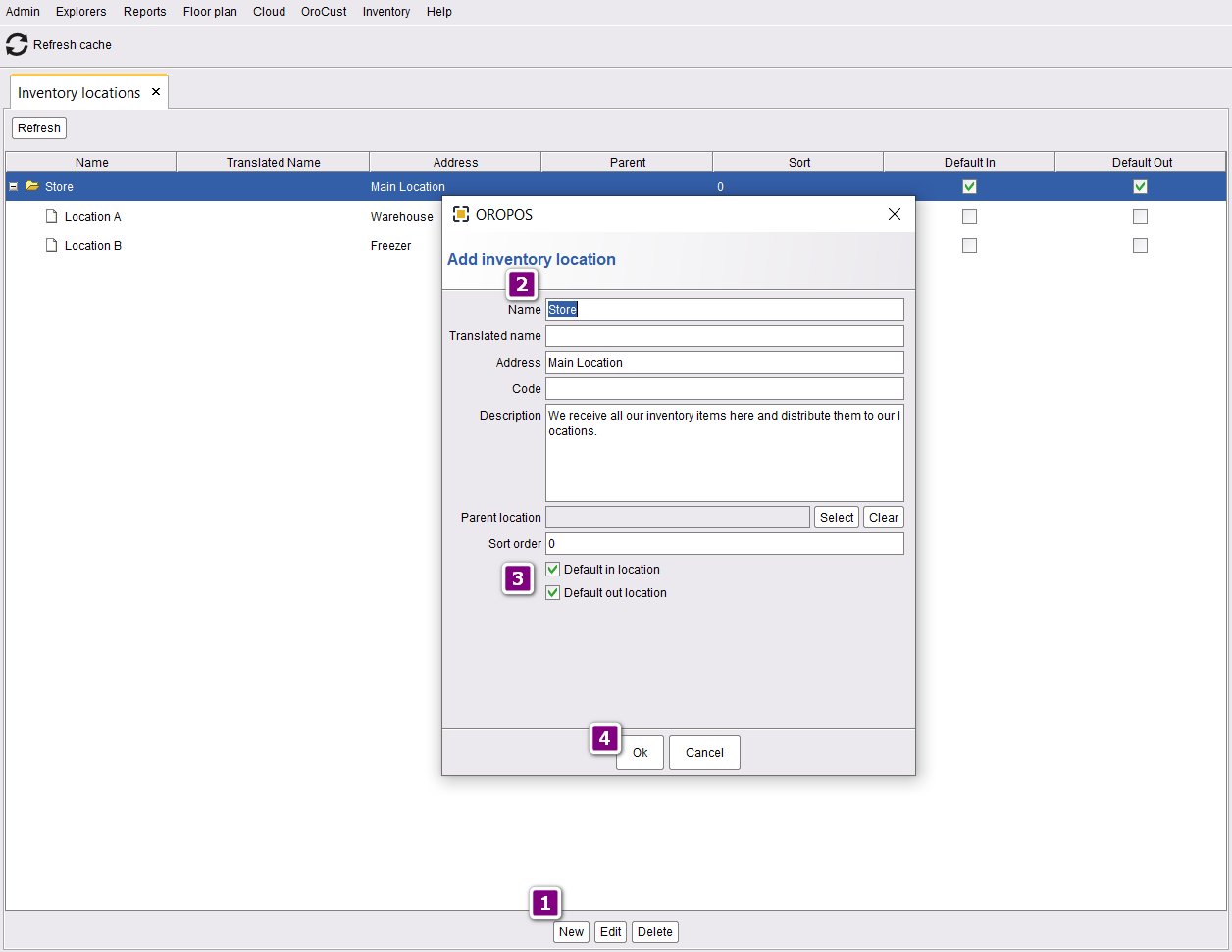
- Click on New to add a location.
- Insert the location name and other pieces of information.
- If you want you can set it Default for IN and OUT.
- Press ok to save the changes.
After that, you can also add as many the locations as you need. If a want to specify a child location, for example, “bin” under “shelf”, then specify that in parent location. Details steps are as follows
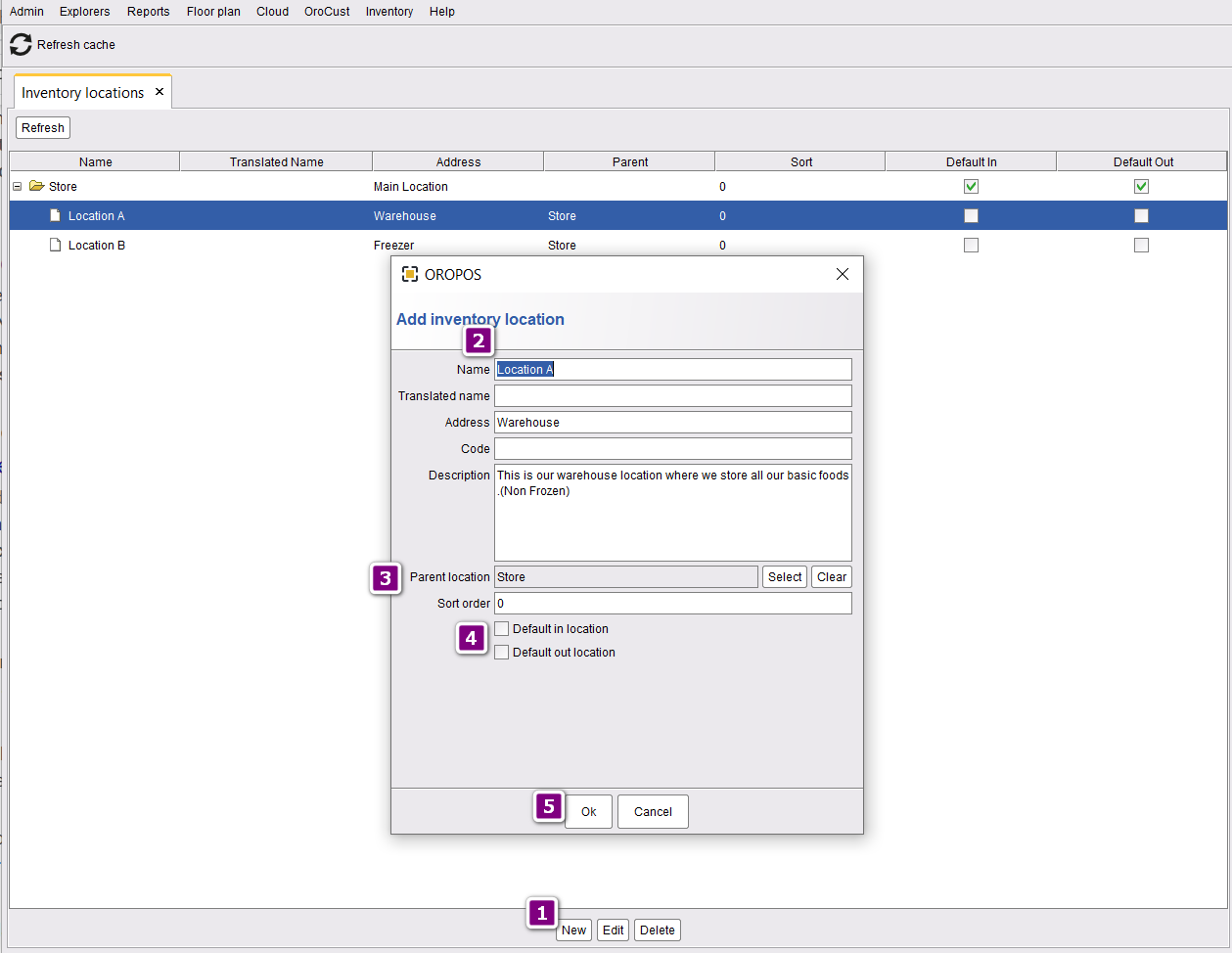
- Click on new to add new locations.
- Name the new location and insert other pieces of information about the location.
- Choose the parent location. The location where inventories will receive from.
- Leave the default in and put location blank because this location uses only for storing the inventories.
- Press ok to save the changes.
You can also setup Default locations in the inventory plugin configuration.
Disclaimer: The information and media included on this website are not legal documents. Whilst we make every attempt to ensure the accuracy and reliability of the information contained in the documents stored, served and accessed on this site, this information should not be relied upon as a substitute for formal advice from our company. Features described in this document are subject to change without any notice.